Flax-Linen in history
It is the oldest fibre and one of the most universal. From fragments of fabric dating back 30,000 years discovered in a cave in the Caucasus to the world-famous Bayeux Tapestry, from medieval embroidery to the latest high-tech research, flax-linen has played a central role, century after century, as a faithful and precious ally in all of humanity’s great endeavours.

Fascinating and mysterious, the flax saga remains a subject that fascinates historians. Even today, prehistory enthusiasts continue to marvel at the ability of Neolithic people to transform flax fibre into thread, and then fabric. Experts in religious studies observe its presence throughout ancient cultures, from the pharaohs of Ancient Egypt to the Christian world, where linen became a symbol of purity, spirituality and eternity. Specialists in everyday life, and its evolution over the centuries, are not to be outdone. Linen is one of their primary subjects of study through its role in agricultural techniques, dietary habits and lifestyle as reflected in crafts (wall hangings, rugs, tapestries, etc.). As for fashion enthusiasts, they regard linen as one of the key elements in the history of clothing, from the medieval shirt to the Renaissance court costume, from 18th-century embroidery to contemporary creations by Christian Dior or Balenciaga.
Key moments in the history of Flax-Linen
Prehistory: Flax-Linen already being made into fabric
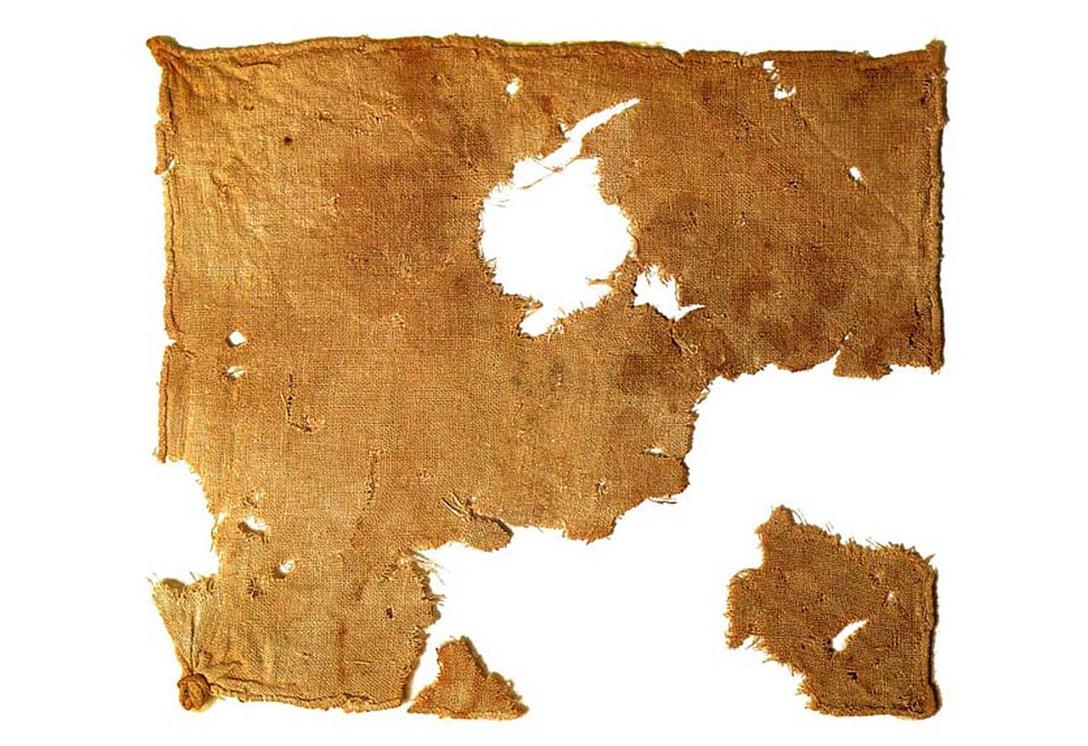
The discovery of flax fibres in a cave in the Caucasus, inhabited 30,000 years ago, is believed to be the oldest evidence of the wild plant being used for textile purposes. In the same region, fragments of fabric, some of which had been dyed, dating back to the 5th millennium BCE have been found, suggesting more sophisticated craftsmanship.
Antiquity: Linen, the fabric of the pharaohs
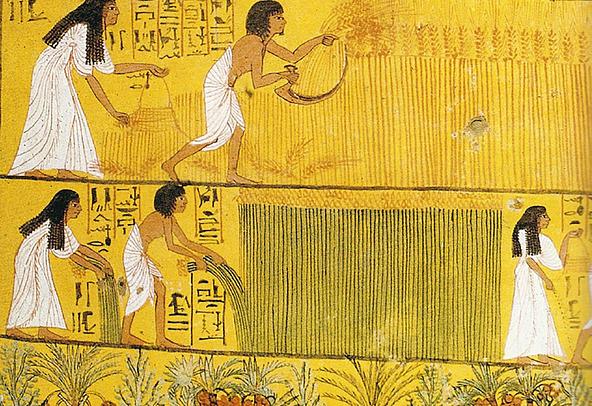
It is one of the most moving images from the tomb of Sennedjem in Luxor. A parchment showing a series of scenes depicting flax-growing methods as practiced by the ancient Egyptians. Harvested during the growing stage, the flax was processed in a manner almost identical to that of today (from retting to scutching), then spun and woven in workshops, near the temples and palaces. These sophisticated skills and techniques allowed for the creation of a wide spectrum of fabric qualities, ranging from everyday linen to the most precious cloths, highly prized by the pharaohs, as can be seen in the fabric of extreme fineness found in Tutankhamun’s tomb.
The Christian era : Linen and spirituality
It was 2015. The Church decided to publicly display the Shroud of Turin, also known as the Holy Shroud, the linen cloth said to have wrapped Christ at the time of his burial. More than two million people gathered in contemplation before this symbol of Christianity, which also bears witness to the importance of linen in church rites, from burial shrouds to priests’ vestments and to altar cloths during Mass.
A symbol of purity, lightness and divinity, linen is closely linked to spirituality. In the Bible, it is mentioned several times in association with holiness and righteousness. In the Book of Exodus, it is described as the material used to make the garments to be worn during sacred ceremonies. In the Book of Revelation, it is used to represent the righteousness of the Saints. Finally, it is more broadly regarded as a symbol of the cycle of life, encompassing birth, death and resurrection.
333 BCE : Alexander the Great’s linen armour
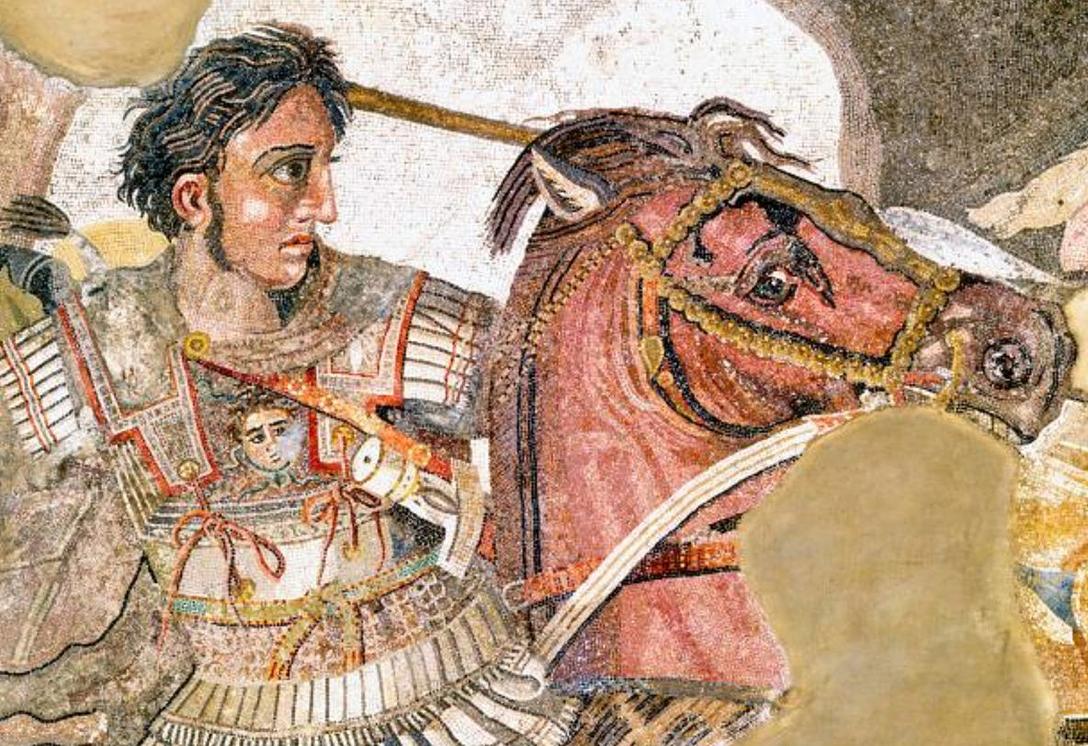
This is the sort of detail that historians love. Alexander the Great is immortalised as the central figure in a mosaic discovered in the House of the Faun in Pompeii, The scene pictures one of the bloodiest battles of the Gallic Wars. The armour protecting his chest, comprised of 15 to 20 layers of linen soaked in linseed oil and stiffened by air-induced oxidation, made the famous king an invincible warrior. Known as a linothorax, this armour is considered to be the world’s first composite material.
1066: Linen and the Bayeux Tapestry
623 human figures and 994 animals, 37 fortresses and 41 ships… These dizzying numbers reveal the incredible richness of the world-famous Bayeux Tapestry. This linen canvas, 70 metres long and 50 centimetres wide, embroidered with various types of thread, tells the story of William the Conqueror’s extraordinary conquest of England. As a historic document, it is of inestimable value for our understanding of 11th-century Normandy… and it is immortalised on linen.
The Middle Ages : Linen enters the castle
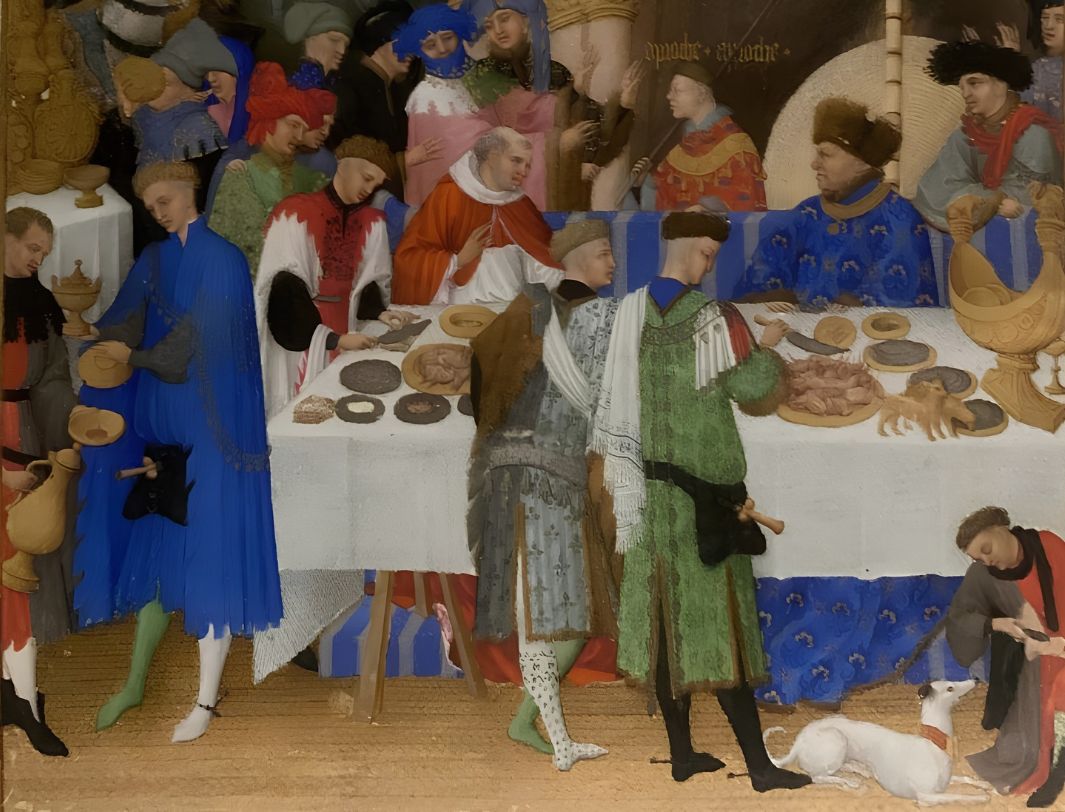
Historians the world over come to the Condé Museum in Chantilly to admire a unique book… “The Very Rich Hours of the Duke of Berry” depicts medieval life in detail, including daily life at the castle, princely scenes, and work in the fields. Among the 131 miniatures, many portray banquets where guests take their seats at a table laid with an immense white linen tablecloth that falls to the floor, symbolising the purity of altar cloths and affiliation to the same social elite.
16th century: linen thread lace
Various techniques for making linen lace emerged in the 16th century in Flanders, France and Italy. Bobbin lace involved two techniques: continuous thread : as in Antwerp or Valenciennes, cut thread as in Brussels. The needle lace technique, which originated in the 16th century on the small island of Burano, off the coast of Venice, produced linen lace characterised by its distinctive air stitch (punto del aria), which plays on the interplay of light and shadow, and earned it international renown. This lace, which was exported at exorbitant prices throughout Europe, spurred the establishment of lace-making workshops in France under the impetus of Colbert, Louis XIV’s Minister of Finance, and notably inspired the famous lace styles of Alençon and Brussels.
17th century: Linen conquers Europe
The year is 1685. King Louis XIV revoked the Edict of Nantes, signed by Henry IV in 1598 and guaranteeing freedom of religion for Protestants in France. As a consequence, more than 6,000 French weavers and lace-makers were exiled and found refuge in the Netherlands, Switzerland, Germany, England and Ireland. These master craftsmen skilfully applied their expertise in their new homes, helping to spread the culture of linen throughout Europe.
18th century: Linen is making its mark in fashion
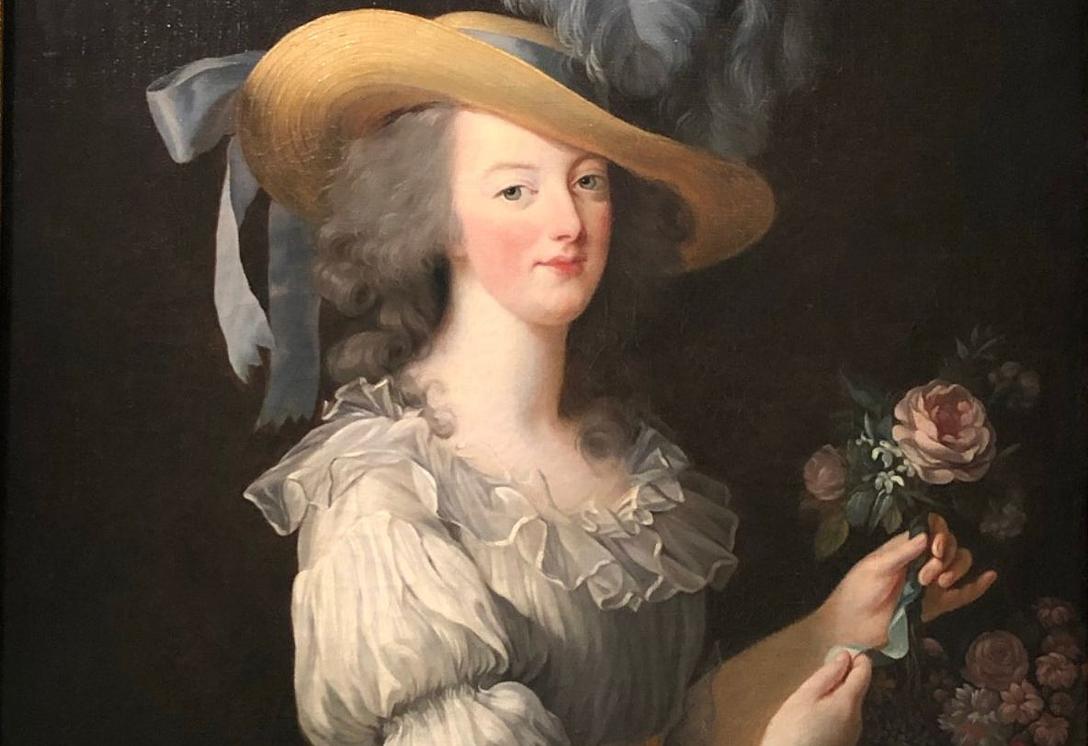
In the 18th century, linen became one of the iconic fabrics of fashion. Advances in weaving and finishing techniques gave rise to ever finer fabrics, such as lawn cloth and toilettes, prized for their lightness and transparency. Men’s shirts were adorned with lace, ruffles and refined embroidery, while women adopted headscarves made of very fine linen and, under the influence of Marie-Antoinette, the famous “en gaulle” lawn dress, symbolizing a freer and more natural silhouette. From men’s and women’s wear to children’s clothing, linen thus kept pace with changing tastes and fashions, before the French Revolution heralded a more understated aesthetic.
19th century: Linen and the Industrial Revolution
In the 19th century, the Industrial Revolution profoundly transformed linen production. Mechanical looms, along with new spinning and bleaching techniques, made it possible to increase output, reduce costs and make this fibre accessible to the general public. Adopted by all social classes, linen became central not only to the everyday clothing of workers and peasants, but also to the summer suits and leisurewear of the bourgeoisie. Despite growing competition from cotton, it retained a prominent place thanks to its technical qualities, and remained an aesthetic benchmark in the worlds of fashion and lace.
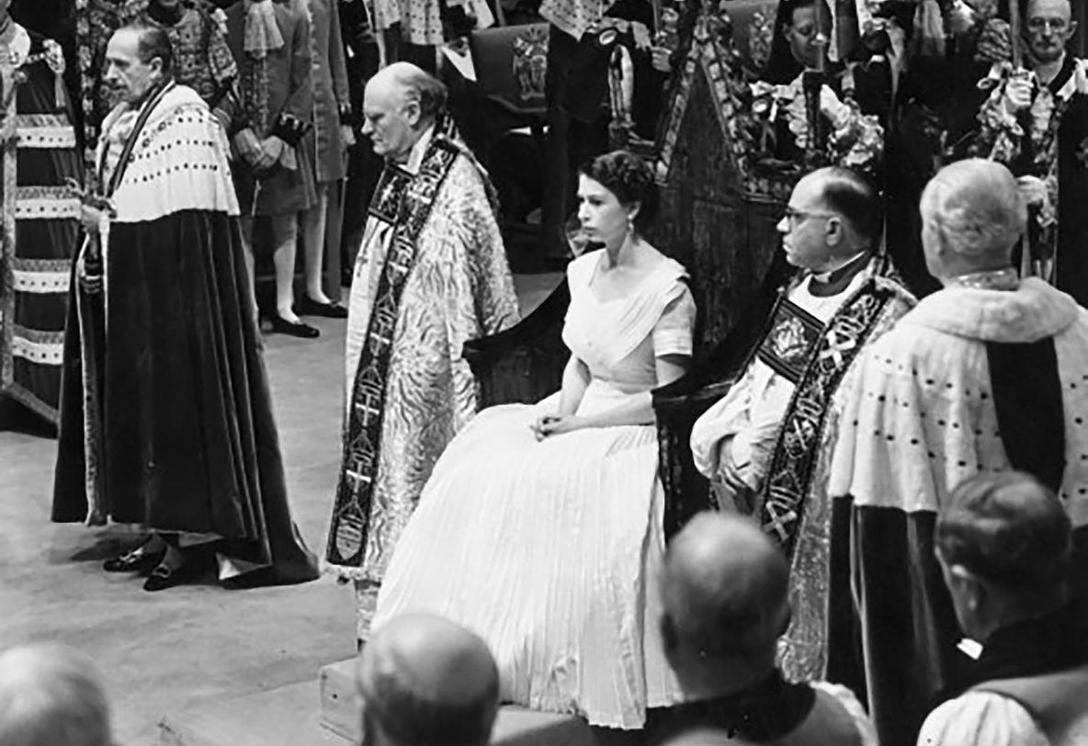
1953: Linen at the coronation of Queen Elizabeth II
On 2 June 1953 at Westminster Abbey, the young Elizabeth was proclaimed Queen. Her coronation gown remains etched in the collective memory of the British people, embroidered with the floral emblems of the Commonwealth nations: the English rose, the Scottish thistle, the Canadian maple leaf, and the lotus flowers of India and Ceylon… But history has also recorded that the Queen wore a simple linen gown over her ceremonial gown, to emphasise the sacred nature of the ceremony.
1970: Fashion designers embrace Linen
Having faced competition first from cotton and then from synthetic fibres in the mid-20th century, linen has experienced a genuine revival since the 1970s. Designers rediscovered the aesthetic and technical qualities of this natural fibre. Textile innovations also made it finer, more supple and better suited to the demands of contemporary fashion. Renowned fashion houses and designers began to embrace linen, reinventing it collection after collection, until it became a medium for creative expression – elegant, innovative and resolutely modern
The 2000s-2020s: Certified Flax-Linen of European origin
Constantly evolving, the flax/linen culture has undergone major changes over the last two decades, driven by new generations of spinners, weavers and knitters. Linen knitwear and stone-washed linen have ushered in a new era, giving the fabric unprecedented suppleness and comfort. To highlight the nobility of linen, its natural qualities and its potential for innovation, the Alliance has helped establish two certification schemes, guaranteeing the European origin of the flax fibre and its traceability throughout the value chain.
Flax-Linen, the fibre of civilisation(s)
A journey to the heart of an ancient fibre
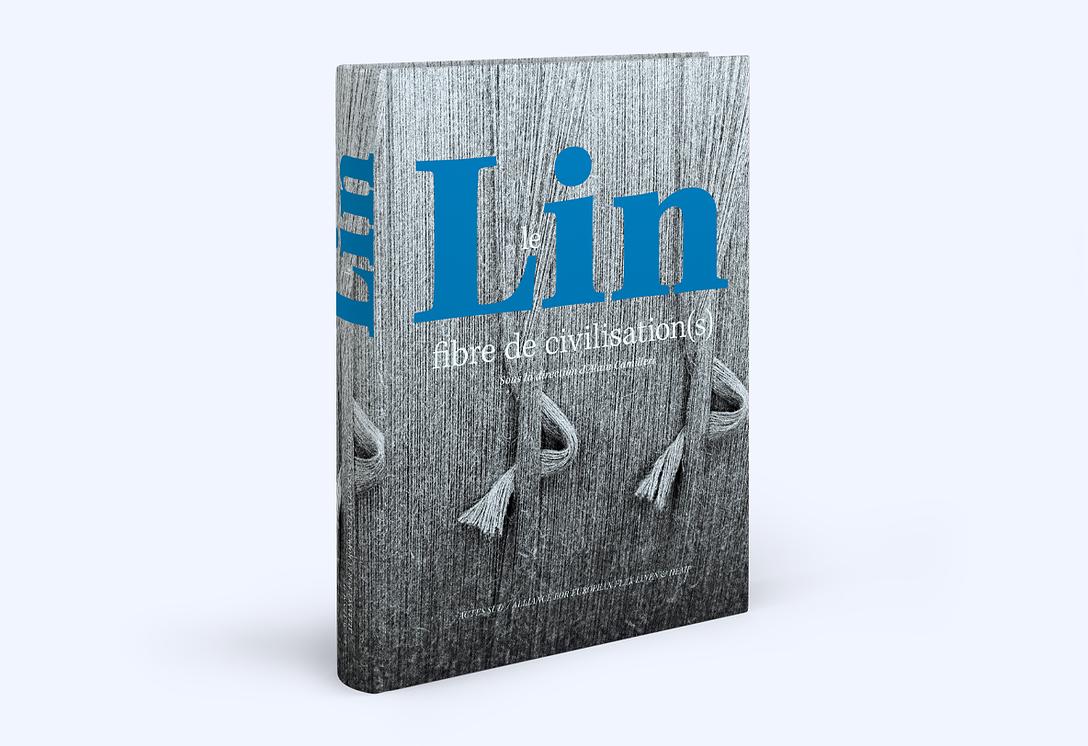
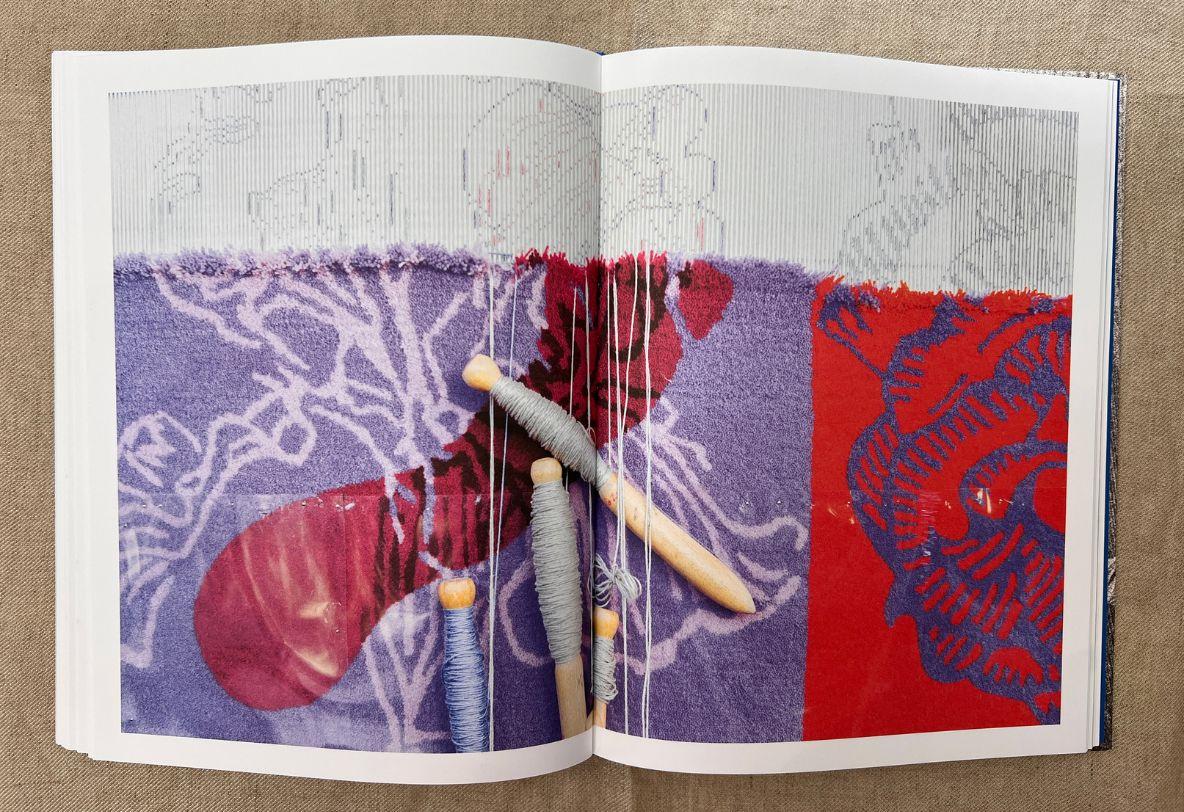
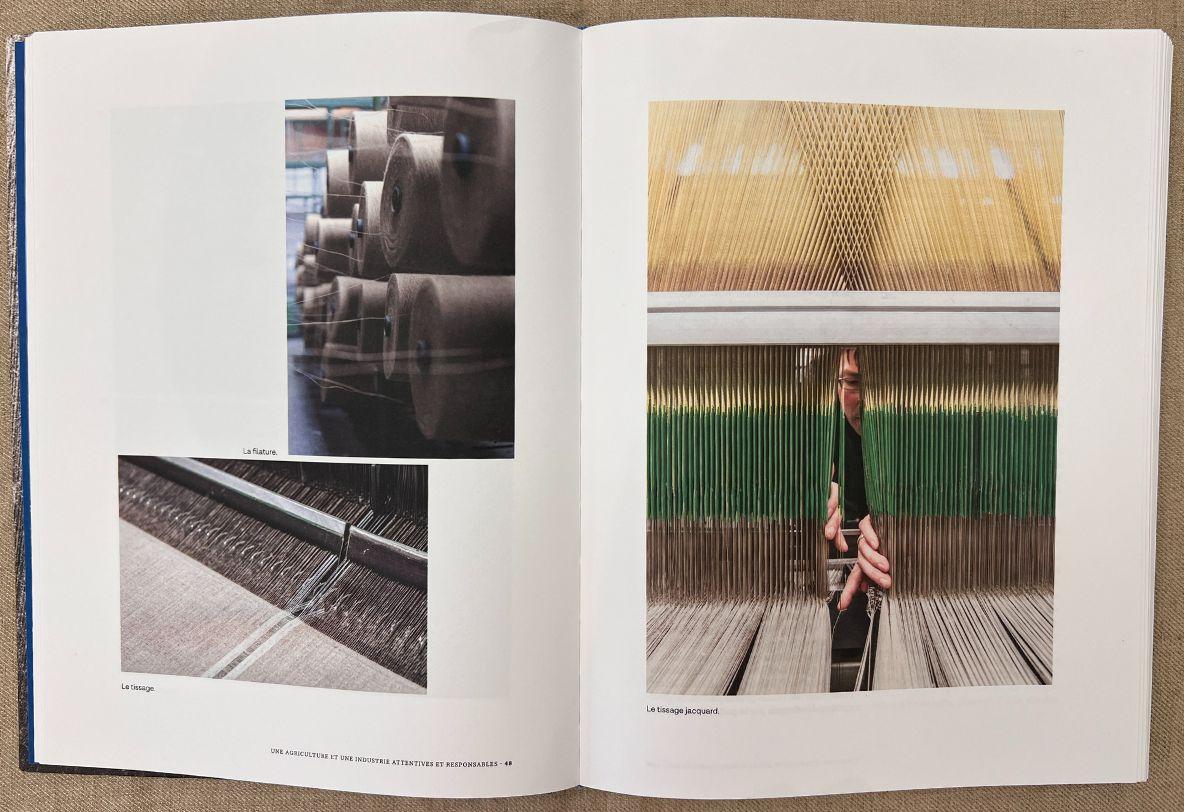
Co-edited by Alain Camilleri and the Alliance for European Flax-Linen & Hemp, this reference work traces the exceptional history of flax, from prehistoric times to the present day. Through contributions from numerous specialists (historians, archaeologists, scientists, designers and industry stakeholders), it explores the many facets of this plant fibre. All aspects are covered: agricultural, cultural, economic, technological and artistic… It also highlights the major role of flax in contemporary subjects such as innovation, traceability and sustainable development.
Published by Actes Sud.
Editions Actes Sud
Only available for sale in French version.