Bio-based Flax and Hemp composites are gaining traction across industry
March 09, 2026
Bio-based composites made from Flax and Hemp are gaining ground across industry. At JEC World 2026, these natural fibres highlight their potential in automotive, construction, sport and design applications.
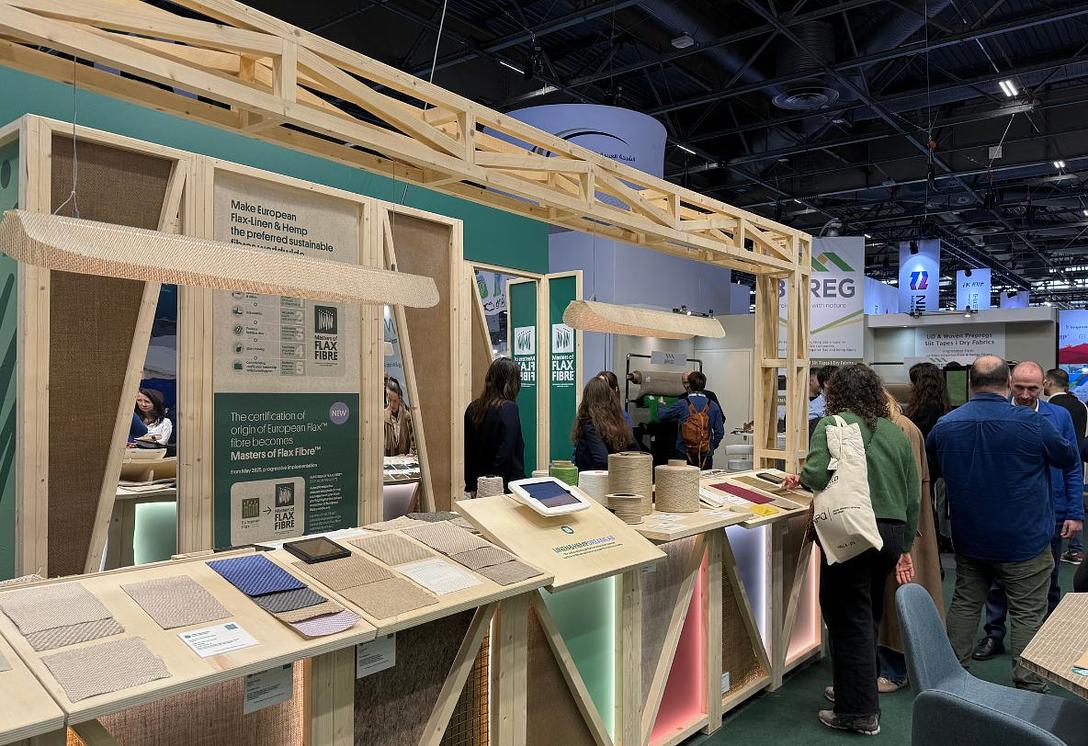
From 10 to 12 March, JEC World 2026 will showcase sustainable materials within the Bio-Materials Village. Organised by the Alliance for European Flax-Linen & Hemp, this exhibition area presents the latest innovations in natural fibre composites.
Expanded by more than 30% compared with the previous edition, this space brings together fourteen companies representing the entire value chain: fibre production, processing, bio-resins, technical fabrics and composite materials. The aim is to demonstrate that flax and hemp fibres are becoming credible alternatives to conventional materials, helping industries move towards more sustainable manufacturing.
Bio-based composites in Flax and Hemp are gaining ground in the industry
The Bio-Materials Village at JEC World illustrates the rapid growth of bio-based composite materials across multiple industrial sectors.
Formerly known as the Natural Fibres Village, the exhibition space now covers 333 m², compared with 250 m² in 2025. It highlights practical applications in several areas:
- Automotive
- Cnstruction and architecture
- Marine
- Sport and leisure
- Design and lifestyle products
This diversity demonstrates that natural fibres such as flax and hemp can increasingly meet the performance, reliability and sustainability requirements of modern industrial applications.
Natural fibre composites in the automotive sector: lighter and more sustainable vehicles
The automotive sector is one of the fastest-growing markets for natural fibre composite materials.
An urban logistics vehicle using flax and hemp composites
The Bordeaux-based start-up MidiPile Mobility is presenting a compact pedal-assisted electric quadricycle designed for last-mile urban logistics.
Its structure incorporates sandwich cargo boxes made from flax and hemp composites, developed with Ecotechnilin and Novamotum. These materials reduce vehicle weight while lowering the overall carbon footprint.

Improving the mechanical performance of bio-based composites
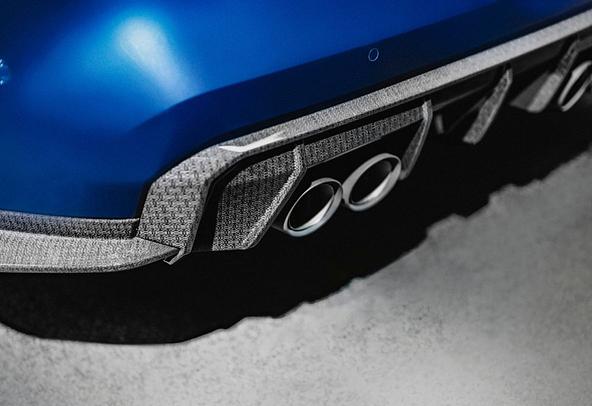
Belgian company Biofibix, a spin-off from KU Leuven and a finalist in the JEC Startup Booster 2026, is exhibiting a hypercar rear wing demonstrator manufactured using flax reinforcements.
The technology addresses a key challenge of bio-based composites: structural consistency. By controlling fibre orientation precisely, the material delivers more reliable mechanical performance.
Natural fibres in electric vehicles
The company Bcomp is also showcasing bucket seats engineered for the Cupra Born VZ electric vehicle.
Developed with Cupra and Italian seat specialist Sabelt, the project introduces the first fully natural fibre seatback used in a production car, replacing traditional carbon and glass fibre structures.
Bio-based composite materials for sustainable construction and architecture
Natural fibre composites are also finding increasing use in the construction sector.
Among the materials presented are BastWave bio-composite panels, manufactured in the United Kingdom using hemp fibres and bio-resin.
These panels offer several advantages:
- High structural rigidity
- A low carbon footprint
- Suitability for both exterior cladding and interior architecture
They have already been installed in prestigious buildings, including the Young V&A Museum in London.
Such examples demonstrate the potential of bio-based materials for sustainable architecture.
Natural fibre composites for marine and nautical applications
In the marine sector, bio-based composites are also being tested in high-performance environments.
The company Greenboats is collaborating with ILCA, the international Olympic sailing class organisation.
The stand features a flax fibre foil mast, demonstrating that natural fibre composites can meet the demanding mechanical requirements of competitive sailing.
The initiative aims to gradually replace conventional materials in order to reduce the environmental impact of sailing equipment.
Flax fibre sports equipment: comfort and vibration damping
Flax fibres offer particularly interesting properties for sporting goods.
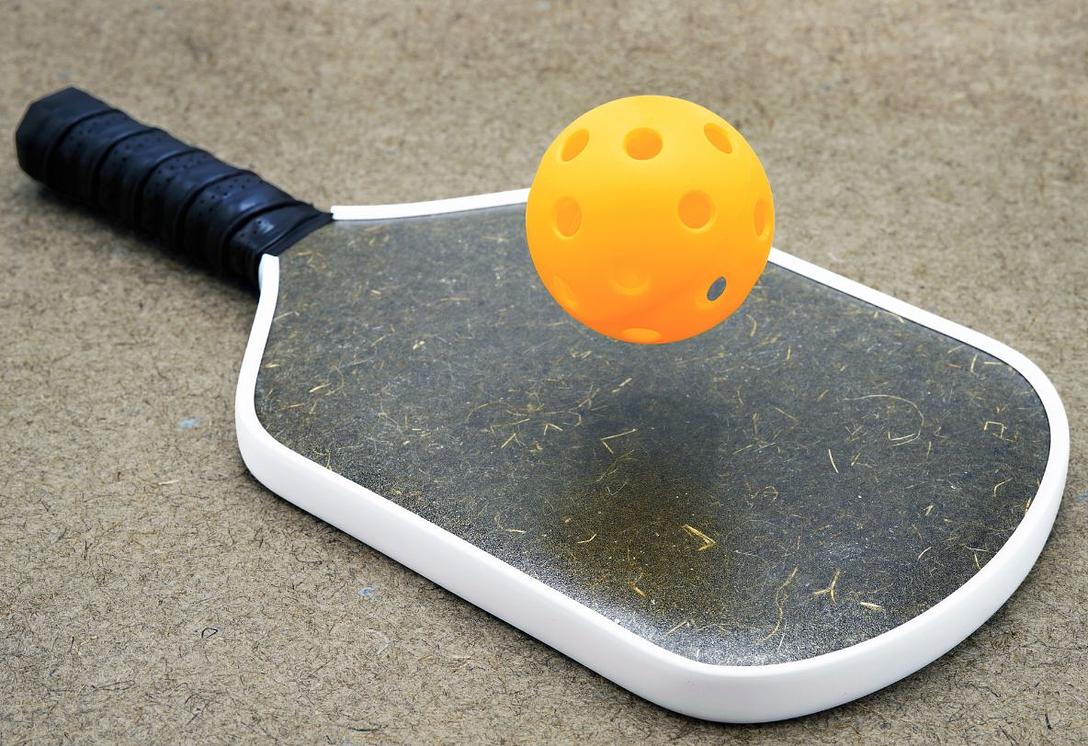
The exhibition includes a range of equipment such as:
- Surfboards
- Skis and ski poles
- Tennis rackets
Among them is the premium tennis racket range by Babolat, which incorporates NF²-Tech flax reinforcements developed by EcoTechnilin.
The key advantage of flax lies in its natural vibration damping properties, which improve comfort and reduce shocks transmitted to the athlete.
Design, luggage and premium products: natural composites enter the lifestyle sector
Flax and hemp composites are also expanding into high-end design and lifestyle markets.
The exhibition features items such as:
- Handbags and luggage
- Premium footwear
- Luxury packaging
Lightweight Flaxcomp® composite panels from DEMGY illustrate these new applications. Produced using rapid thermocompression, they enable the manufacture of lightweight, recyclable and durable composite panels, particularly suited to premium luggage.
Innovative manufacturing processes for bio-based composites
The exhibition also highlights several advanced manufacturing technologies applied to natural fibre composites:
- 3D printing
- Pultrusion
- Coreless filament winding
For example, the FIBRAS team at Eindhoven University of Technology has developed a building reinforcement structure made from flax fibres using a robotic manufacturing process.
This approach allows structural geometry to be tailored precisely to mechanical load conditions without requiring changes to industrial hardware.
Hemp in architecture: the Hemp Halo prototype explores new applications
The Hemp Halo Canopy project demonstrates the potential of hemp in architectural design.
This prototype 3.3-metre architectural canopy made entirely from hemp highlights recent advances in long-fibre processing.
These developments enable the creation of lightweight, strong and waste-free structures suitable for urban design, outdoor furniture and public spaces.
Flax and hemp composites supporting the transition to a low-carbon industry
The growth of the Bio-Materials Village at JEC World 2026 reflects the increasing adoption of bio-based natural fibre composites.
Thanks to advances in processing technologies and industrial manufacturing, flax and hemp are now emerging as credible alternatives to synthetic fibres, helping industries reduce the carbon footprint of materials and products.
Read also
-
Linen Fabrics: Lineaesse Tessuti, Riopele Texteis, Texmoda Tessuti Read morePremière Vision Paris 2026: European Flax-Linen and Hemp showcase their innovations for Autumn-Winter 2027–28