Design Parade 2026: Six Finalists Champion the Creativity of European Flax-Linen in Their Projects
June 04, 2026
- Home
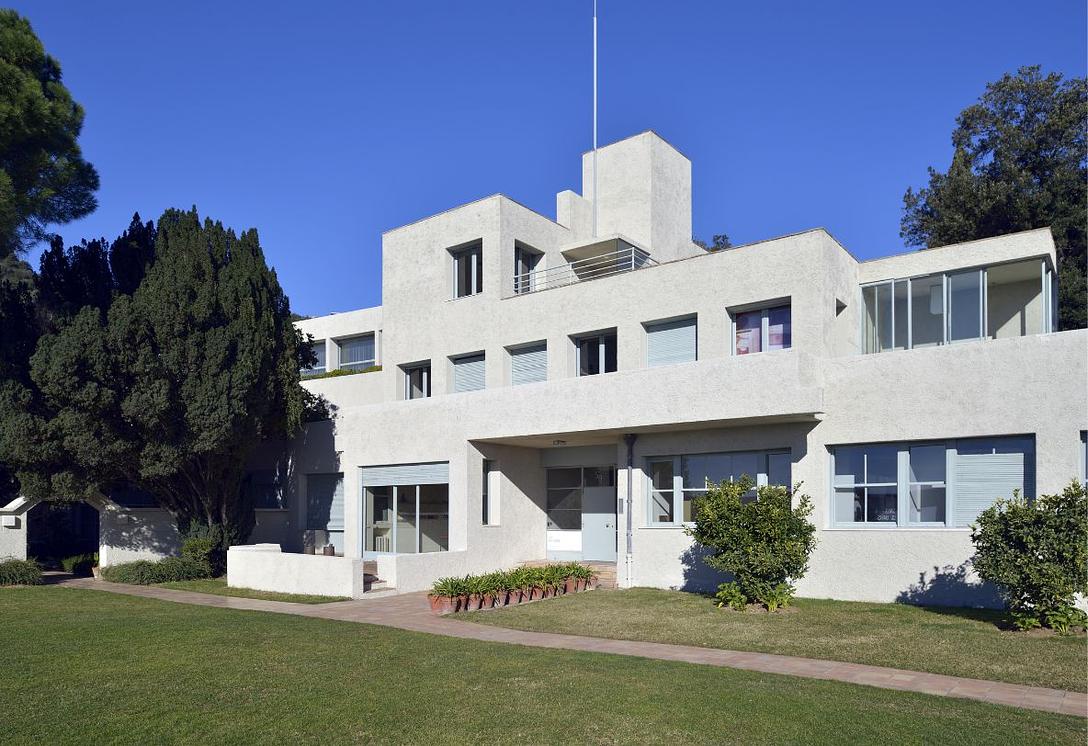
Held in Hyères and Toulon by Villa Noailles, the Design Parade festival aims to promote contemporary creation through professional encounters, exhibitions open to the public, and two competitions: Object Design, established in 2006, and Interior Architecture, launched in 2016.
The Alliance for European Flax-Linen and Hemp showcasing Emerging Creative Talent
A longstanding partner of Design Parade, the Alliance is supporting six finalists this year in the development of projects incorporating European flax certified under the Masters of Flax Fibre™ and Masters of Linen™ certifications.
It continues its mission of raising awareness by highlighting the opportunities and challenges embodied by European Flax, an exceptional plant-based fibre, among the next generation of designers. The Alliance also mobilises its members to provide the materials required for the realisation of the finalists’ projects.
the Alliance welcomes and prepare the finalists to integrate work with flax fibre through workshops, group mentoring sessions and tailored support meetings held at the Linen & Hemp Dream Lab, its Paris showroom.
To prepare the finalists to integrate Linen into their project presented to the Jury, the Alliance welcomes them and trains them to better know and use flax fiber during workshops, group coaching and personalized meetings at the Linen & Hemp Dream Lab, his Parisian showroom.
In this way, young talents become familiar with the functional and environmental properties of European flax-linen, as well as with the materials, textiles and techniques offered by the Alliance’s various members.
The Alliance’s Certifications
Two certifications created and championed by the Alliance guarantee the origin and traceability of European flax: the Masters of FLAX FIBRE™ certification and the Masters of LINEN™ certification.
Flax is cultivated in Western Europe, particularly in France (Normandy, Hauts-de-France, Île-de-France and Brittany), Belgium and the Netherlands. The naturally humid oceanic climate, fertile soils and long-established expertise of flax growers all contribute to the quality of European Flax.
This particular region, which is the world leader in terms of production, accounts for three-quarters of global flax production in the world.
A Collective Momentum Behind European Flax-Line
Several member companies of the Alliance came together to supply exceptional certified European flax.
Whether woven, in its raw state or transformed, the material enabled emerging talents to experiment and create with a strong commitment to addressing environmental challenges. By placing the material itself at the heart of these creative narratives, this partnership reflects the Alliance's ambition to foster meaningful connections between the textile industry and emerging design.
The Alliance introduces young designers to the functional and environmental qualities of European flax, while familiarising them with the materials, textiles and techniques developed and offered by its member companies.
The finalists incorporating European Flax-Linen into their projects
Several member companies of the Alliance have come together to supply exceptional certified flax.
Whether woven, raw or transformed, the material itself has enabled emerging talents to experiment and create with a strong commitment to addressing environmental challenges. By placing materials at the heart of these creative narratives, this partnership reflects the Alliance’s ambition to foster meaningful connections between the textile industry and emerging design.
The Alliance introduces emerging talents to the functional and environmental properties of European flax, as well as to the materials, textiles and techniques developed and offered by its members.
The Finalists Incorporating European Flax into Their Projects
Boris Cojean : La Maison Jaune (The Yellow House)
A fleeting interpretation of Provençal Impressionist paintings
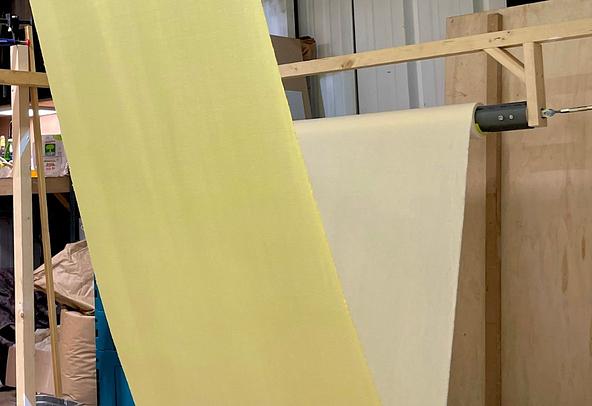
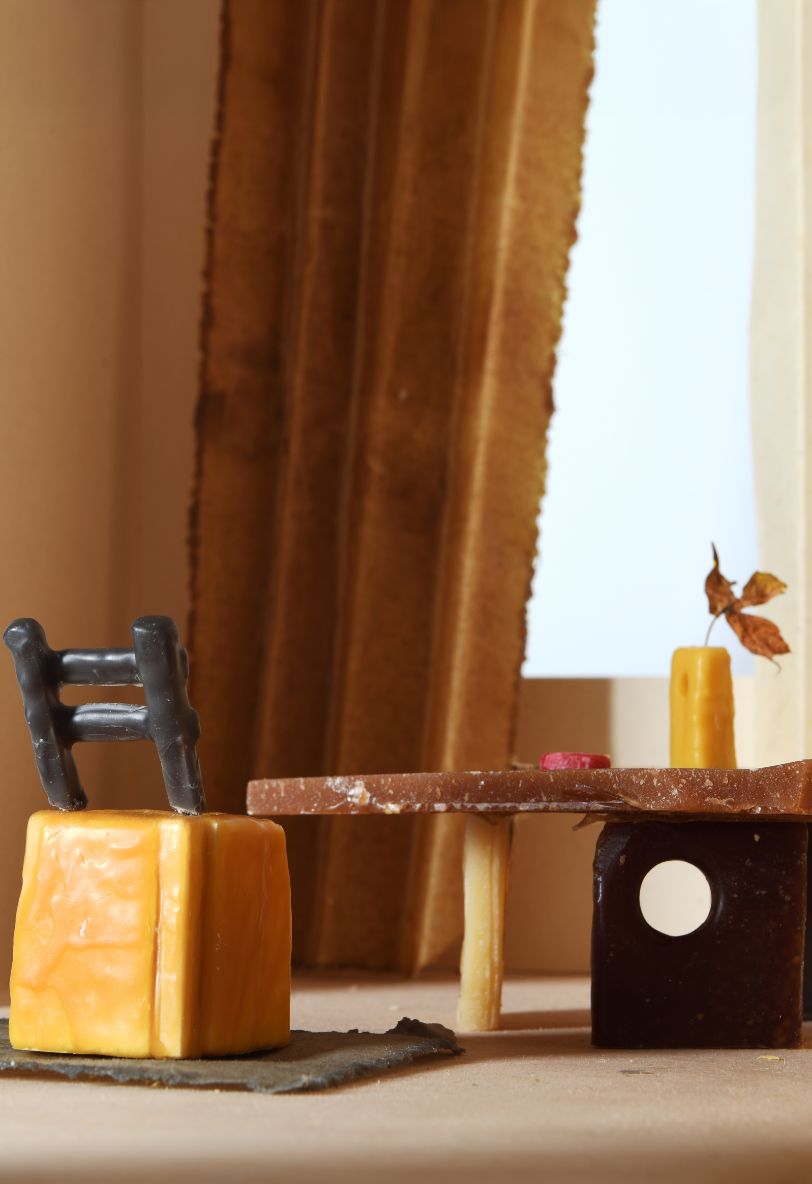
With La Maison Jaune, Boris Cojean has designed an installation inspired by the landscapes and light of Provence. His project is based on the use of an undyed European flax pattern-making canvas immersed in wax. Once cooled, the material becomes slightly brittle and forms decorative light-coloured lines, offering multiple creative possibilities.
This exploration of waxed canvas has led to the development of an innovative finishing technique in which the material becomes both an architectural surface and a decorative element. One of the room’s walls will be entirely clad in this pale yellow linen textile, creating a luminous and immersive environment.
Stepping through the door of La Maison Jaune is like entering a suspended space: an enveloping scent, furniture that seems to ripple, chalky colours, then a single chair, a large table and oilcloth curtains. European flax is used throughout the room’s textile elements — the curtains, the fabric-covered surfaces and the rug. Wax reveals an unexpected translucency in the weave and alters the fabric’s perception. Much more rigid, it cracks and marks when handled, giving it a new decorative presence.
Member: Libeco
 © Boris Cojean
Clément Pasquier
An Immersive Room Inspired by Marcel Proust
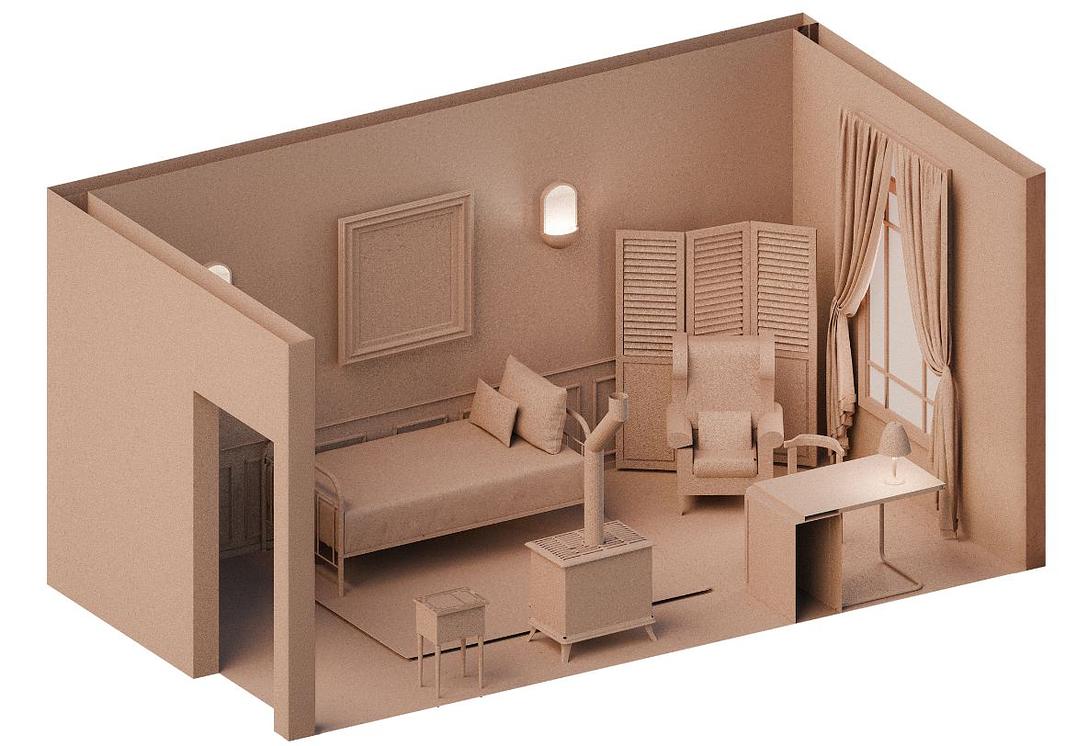
With Temps Perdu (Lost Time), Clément Pasquier imagines an immersive space inspired by the world of Marcel Proust and the room in which In Search of Lost Time was written. The project is not intended as a faithful reconstruction but rather as a mental interpretation of a frozen place, absorbed by time
It deliberately blurs visual, auditory and tactile references in order to create an introspective experience in which time appears suspended. European flax is featured in a curtain placed at the entrance, serving as the support for embroidery work that also incorporates cork.
Through this room, the project explores our relationship with time, memory and materiality by offering a sensory, silent and almost fantastical experience.
 © Clément Pasquier
Sprayed cork covers the floor, walls, ceiling, furniture and accessories, erasing hierarchies between architecture and objects and turning the room into an almost unreal total monochrome. A door curtain made from hemp threads (Safilin - European textile hemp yarn) is integrated into the scenography. Perception is deliberately altered; the place becomes a silent, suspended mental room where time seems to stand still.
Members : Graziano, Safilin (Hemp-fibre door European textile hemp yarn)
Marion Moustey - Ewerton Alves : Le Bureau du Poète (The Poet's Study)
A Textile Interior Installation
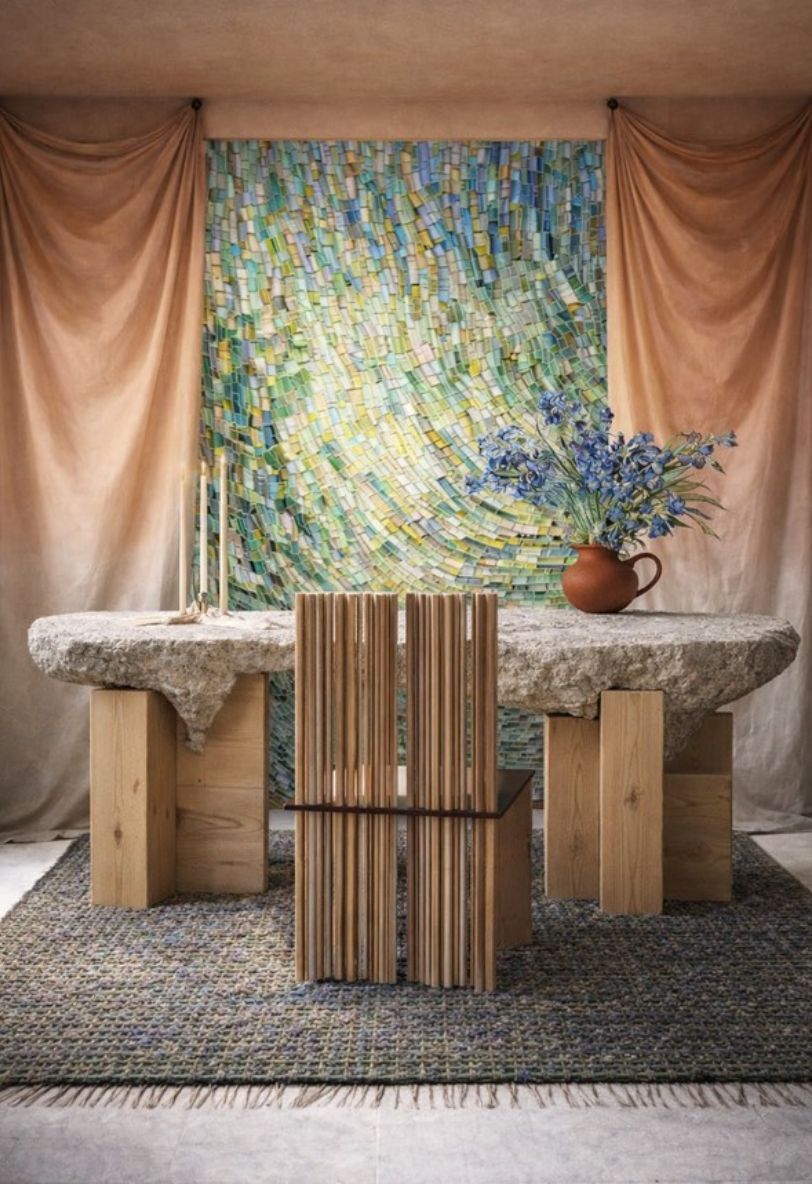
The project conceived by Marion Moustey and Alves Ewerton takes the form of a poet’s study. The installation gives pride of place to textiles, particularly European flax, with large curtains that visually structure the space.
Colour also plays a significant role through the use of plant-based dyes and the creation of a graduated colour effect.
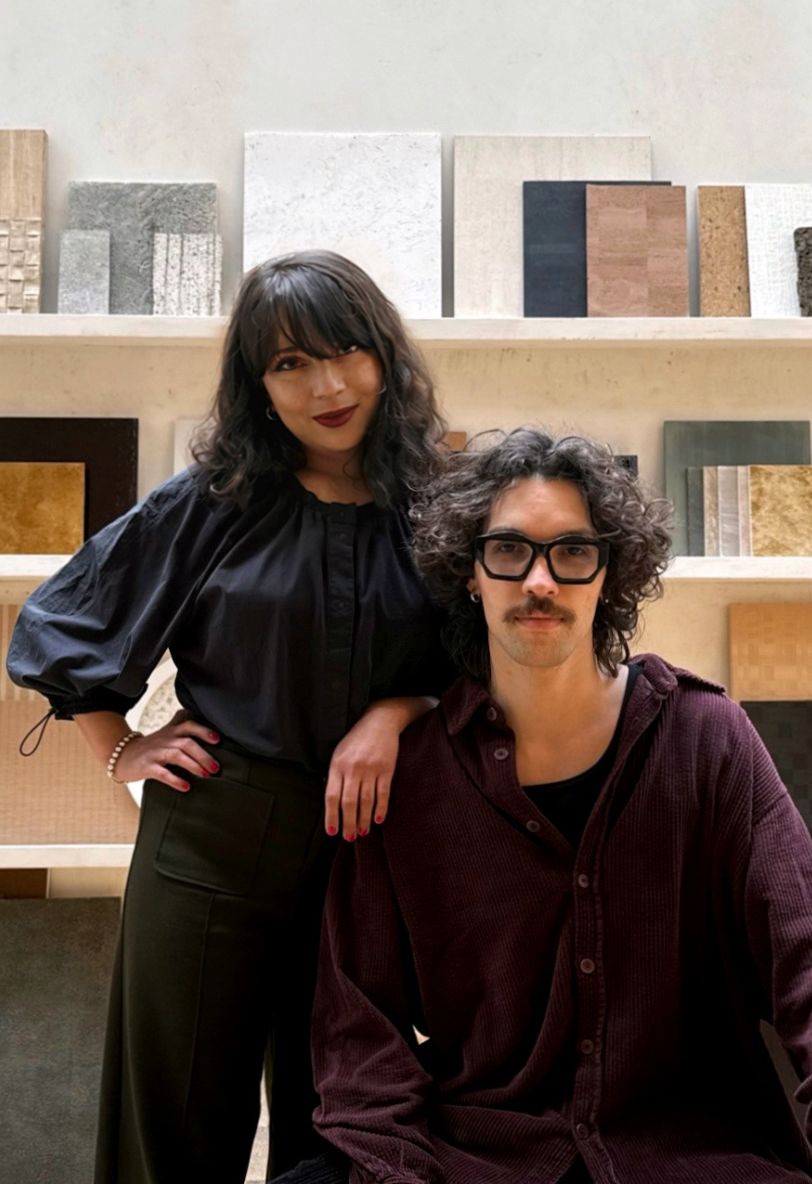
European flax plays an essential role in this project. Chosen for its technical qualities, its restraint and its roots in European agricultural and craft heritage, it supports suspended hangings that help structure the space.
This interior installation features beautiful, highly visible curtains treated with a sweeping colour gradient achieved through vegetable dyeing. The work was developed with support from Céline Thibault.
The focus remains on the curtain’s presence and on the chromatic variation obtained through dyeing. Through its ability to carry colour intensely, filter light and reveal the hand of the maker, it brings together material, light and plant life in an interior landscape suited to writing and reverie.
Member: Klasikine Tekstile
Note : Plant-based dyeing workshop with Céline Thibault
 © M. Moustey - E. Alves
Raphaël Colas - Julien Delaitre : Retour de Pêche (Back from fishing)
A haven at sea
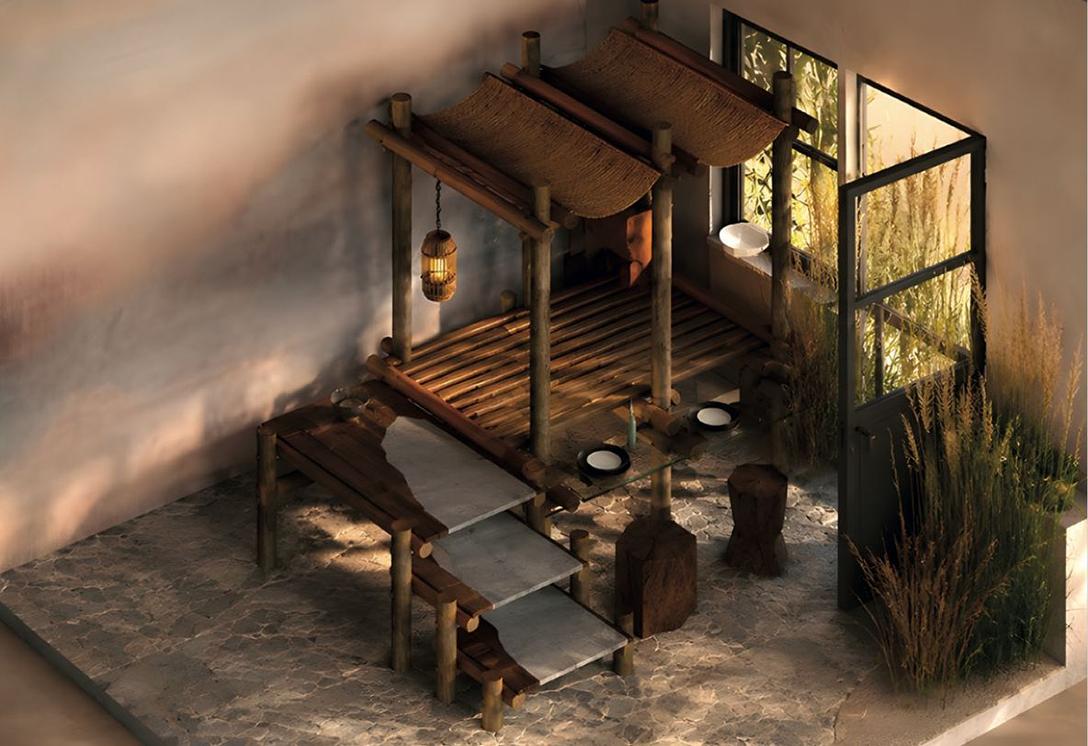
Inspired by the world of Mediterranean fishing, Retour de pêche (Back from fishing) envisions a maritime retreat constructed from a variety of materials salvaged from fishermen’s nets: nylon, metal, driftwood and plastic. Conceived as an open, communal space, the project raises awareness of marine pollution whilst highlighting the value of transforming waste into decorative elements.
Chosen for their low environmental impact, European linen and textile hemp are incorporated into the project through a suspended canopy and various textile elements that contribute to the atmosphere of the space.
This immersive environment invites visitors to reflect on their relationship with the coastline and the impact of human activities on marine ecosystems.
 © R. Colas - J. Delaitre
Retour de pêche imagines a maritime refuge built over time by fishermen in the Mediterranean from waste drawn up in their nets. The project aims for total immersion, with a soundscape and a scent atmosphere, and proposes an inclusive device in which visitors can add waste found at sea or on the beach. Textile hemp is chosen for its handcrafted quality sought, and for the robustness of the canopies that shelter the dining area.
Member: Libeco (hemp components for a hanging canopy)
Valentin Bayoud : Aqua Primitiva
Reinterpreting the primitive hearth: a contemplative experience centred on water
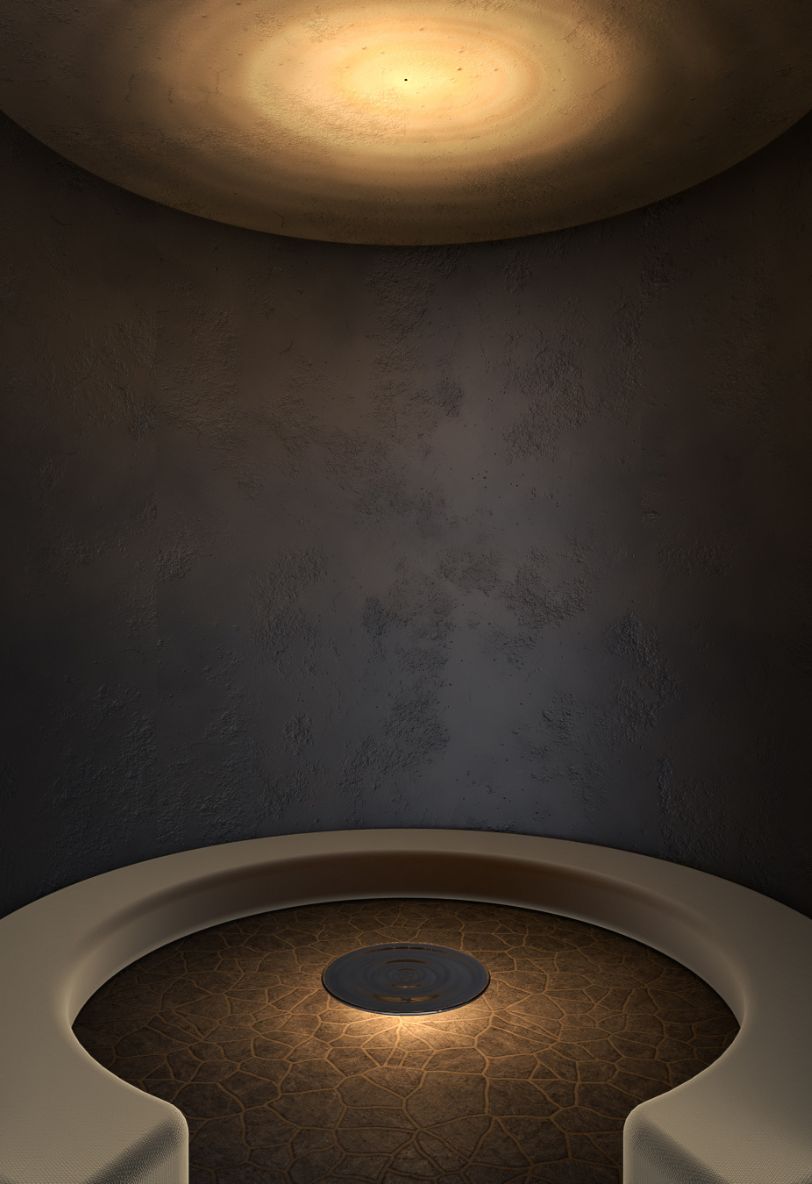
With Aqua Primitiva, Valentin Bayoud has created a circular space for contemplation inspired by the primitive hearth, designed as a place for gathering and sensory experience. The project explores the evolution of our collective needs by placing water at the heart of the installation, through an approach that is at once architectural, sensory and evocative.
European flax finds its natural place here through its understated materiality, combined with local stone, earth plaster, wood and reed. The fabric, left undyed to preserve its original qualities, helps to create a tactile and vibrant atmosphere, in keeping with the project’s approach.
European flax was chosen for the way it fits with the project’s overall material language. As a natural material, it enters into dialogue with local stone, earth render, the timber structure and the reed matting in a search for a restrained, elemental expression. The fabric chosen was selected from a range that favours undyed linens in order to preserve their original qualities.
Member: Flipts & Dobbels
 © Valentin Bayoud
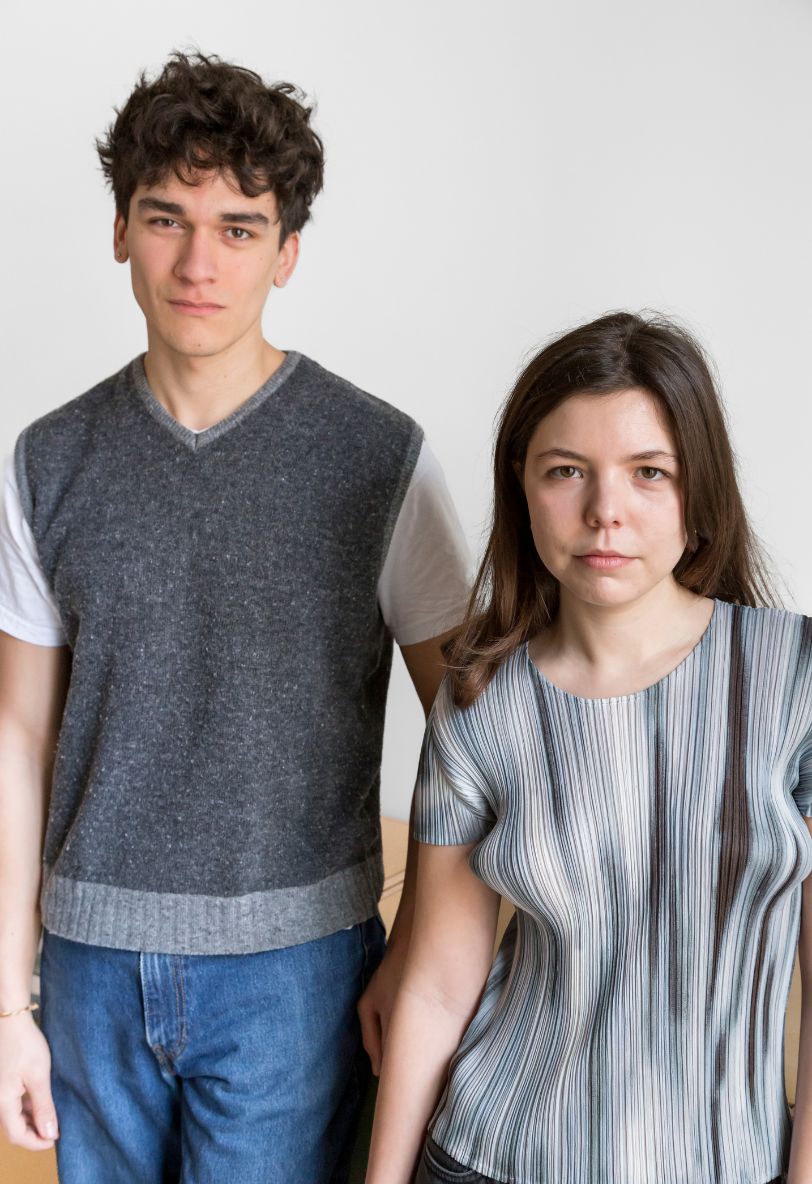
Victoire Lesthevenon - Simon Searle : L’Observatoire (The Observatory)
A place for reflection
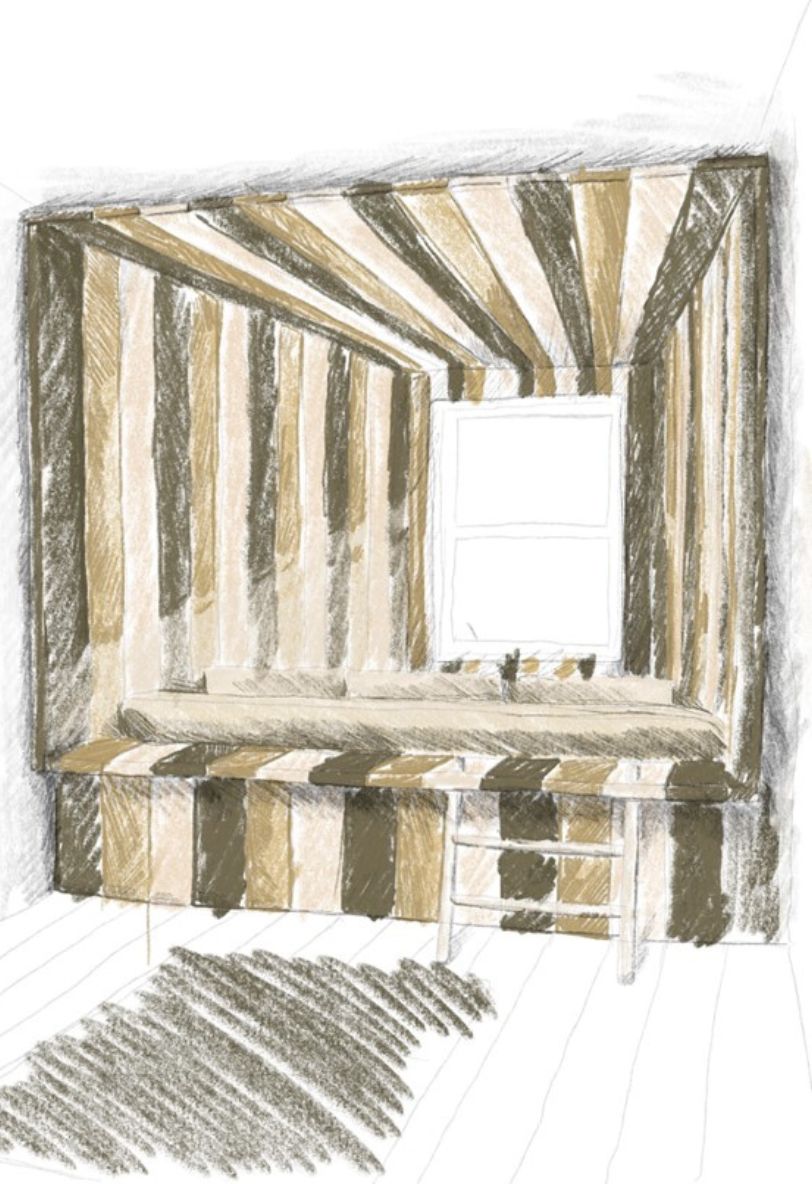
The project turns a domestic space into an observatory facing the Mediterranean landscape. It offers a contemplative experience that blurs the boundary between inside and outside.
The proposal is grounded in close attention to place, local resources and light.
The materials, tones and textures all contribute to a sensitive reading of the surrounding landscape and encourage a renewed relationship between the inhabitant, the architecture and its context. In this way, the project develops an immersive approach in which space becomes a tool for observation, slowing down and reconnecting with living things.
 © S. Searle - V. Lesthevenon
L'Observatoire is presented as a space for contemplation.
The project includes a BIO FIB mattress reinforcement covered with Libeco fabric, a roving layer from Safilin beneath the rug, which acts as a structural element, and a European hemp thread from Safilin.
The whole installation is built around these textile elements.
Members: BioFib, Libeco, Safilin
Design Parade 2026 Jury
Jury Presidents
Sofia Lagerkvist et Anna Lindgren
Front Design
Sofia Lagerkvist and Anna Lindgren are the founders of the Swedish design studio Front.
Their creations are rooted in a collaborative approach combining discussion, exploration and experimentation. They work together at every stage of a project, from the earliest concepts through to the finished product.
Objects designed by Front often tell a story connected to the creative process itself, the materials employed or the conventions of design. In their work, they have notably entrusted part of the creative process to animals, computers and machines. They have imagined constantly evolving interiors, created objects through explosions, developed robotic furniture and designed a collection inspired by their fascination with magic.
Front’s work is represented in the collections of the MoMA, the Victoria & Albert Museum, M+, the Nationalmuseum, the Vitra Design Museum and the Centre Pompidou.
Anne-France Berthelon
Creative Strategist, design critic and journalist
Stanislas Colodiet
Heritage Curator and Director of Cirva
Clara Krzentowski
Director of International Operations, Galerie Kreo
Hervé Lemoine
President of the National Manufactories – Sèvres and Mobilier national
Simon Dupety
Winner of the Design Parade - Object, Grand Jury Prize 2025
Design Parade 2026: Two Major Awards to Honour the Winners
A number of prizes are awarded to the entrants in both competitions, thanks to funding from the festival’s partners, who are committed to supporting them over the long term:
- Sèvres - Manufacture et Musée nationaux (National Manufactory and Museum)
- Centre international de recherche sur le verre et les arts plastiques (Cirva - International Centre for Glass and Visual Arts Research, for the Object competition,
- Van Cleef & Arpels
- le19M
- CHANEL
- les Manufactures nationales – Mobilier national (National Manufactories - Mobilier national) for the Interior Architecture competition.
Practical support is provided from the moment the finalists are selected and continues over a two-year period. It spans a wide range of areas, including funding, production, craftsmanship, materials, publishing, legal guidance, exhibitions, studio facilities and residencies.
The Design Parade Anniversary
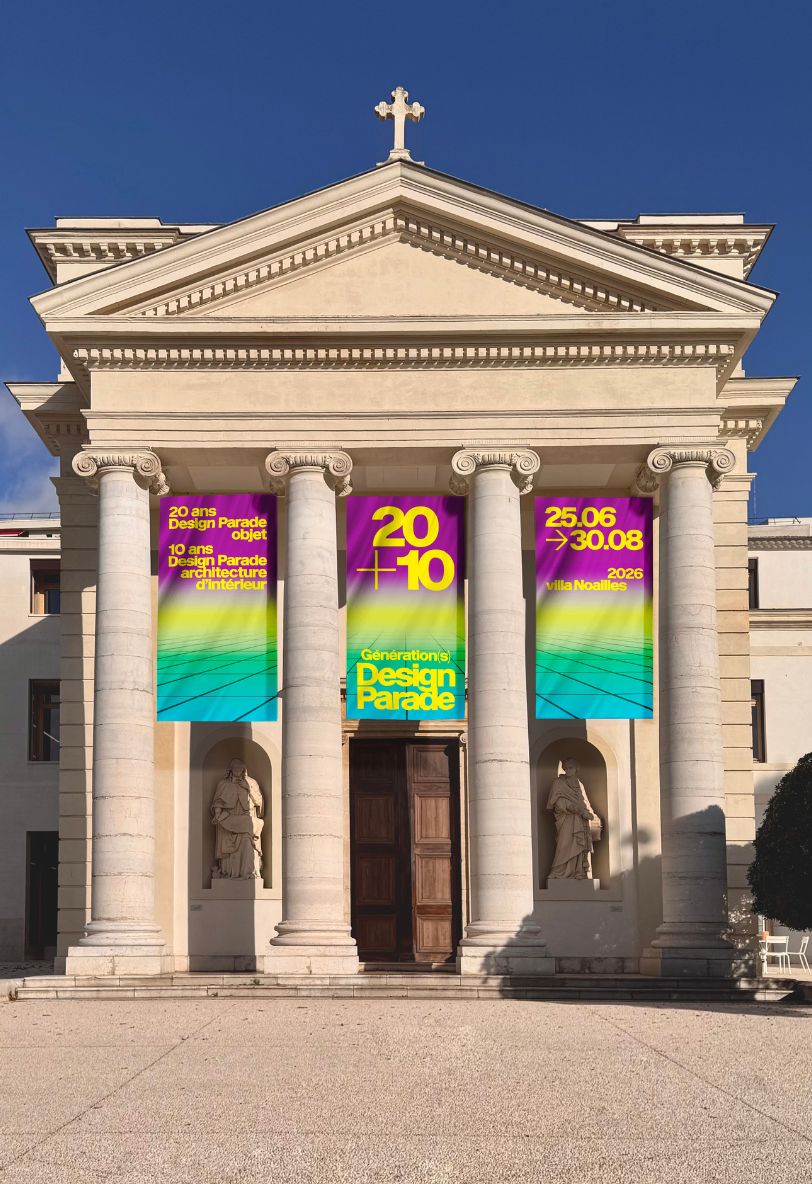
In 2026, Design Parade celebrates a double anniversary: the 20th anniversary of Design Parade – Object and the 10th anniversary of Design Parade – Interior Architecture.
To mark the occasion, the exhibition 20+10: Génération(s) Design Parade offers a distinctive perspective on the designers who have contributed to the festival’s history. A carte blanche has also been entrusted to David Giroire, curator of the exhibition. For this anniversary edition, Villa Noailles exceptionally brings together both competitions and opens its doors wide to the public.
Design Parade is also honouring three influential female designers by appointing them as jury presidents: Sofia Lagerkvist and Anna Lindgren of Front Design for the Object competition, and Laura Gonzalez for the Interior Architecture competition.
Under the artistic direction of Julie Liger, the festival places the 2026 finalists and the 2025 winners - Thomas Takada, Simon Dupety and Malo Gagliardini - at the heart of the historic spaces of Villa Noailles. Through the exhibition design conceived by Joachim Jirou Najou, colour, a defining feature of Design Parade’s identity, creates a visual thread that connects and highlights all the projects on display.